Ritual, Instinct, and Intention: How Katsumi Hayakawa Actually Makes Art
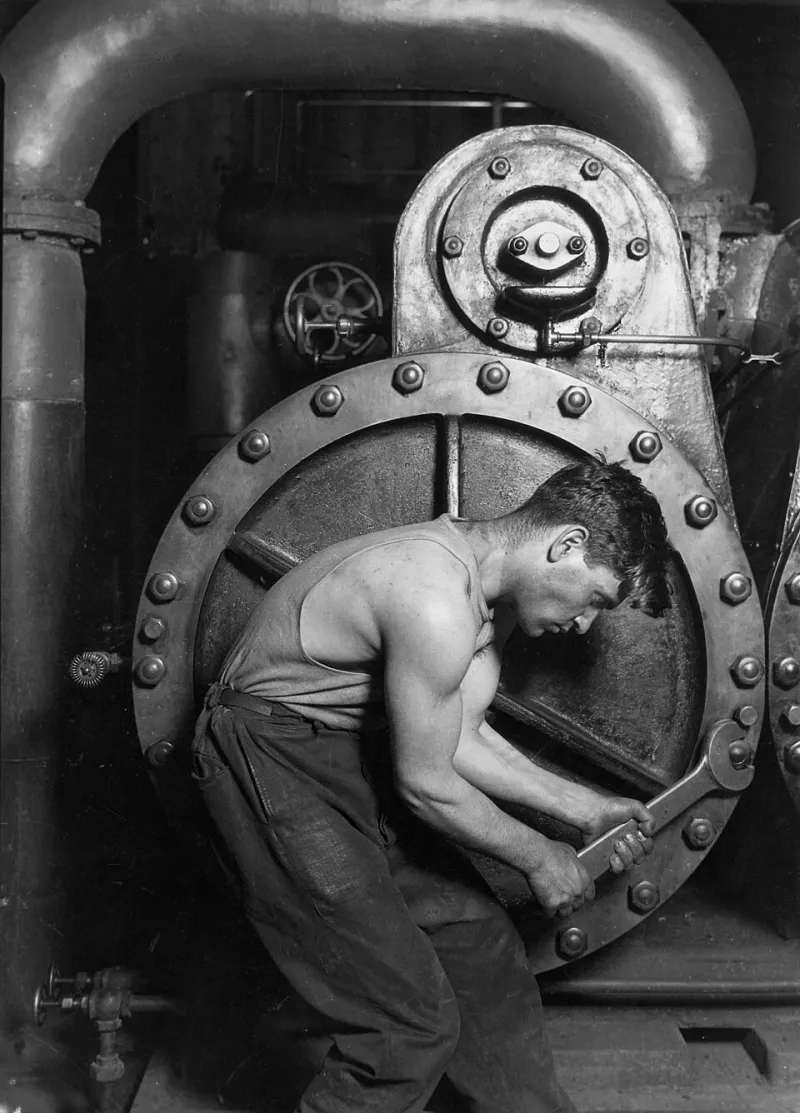
Photo: Lewis Hine, Public domain, via Wikimedia Commons
There's a version of the creative process that sounds almost mythological — the lone genius struck by lightning, producing brilliance in a single inspired session. And then there's the reality. For Katsumi Hayakawa, reality looks a lot more like early mornings, coffee going cold on a cluttered desk, and a notebook filled with ideas that are half-baked on purpose.
That's not a criticism. It's actually the whole point.
Starting Small, on Purpose
Anyone who's spent time around Hayakawa's work knows that finished pieces carry a sense of quiet completeness — like every element landed exactly where it was supposed to. What's less obvious is how deliberately messy the starting point tends to be.
"The first version of anything is basically a permission slip," Hayakawa has said in past conversations about the work. "You're giving yourself permission to be wrong, to be rough, to not know what you're doing yet."
That philosophy shapes everything from the earliest sketches to the first rough cuts of a project. Rather than entering a new piece with a locked-in vision, Hayakawa tends to begin with a single unresolved question — something personal enough to feel urgent, open enough to allow surprise. Collaborators who've worked across multiple projects describe this as one of the most distinctive things about the process: the refusal to arrive with all the answers.
Long-time creative collaborator and production partner Mei Tanaka put it this way: "Most people come to a project with a destination. Katsumi comes with a compass. There's a direction, but the path gets figured out along the way."
The Tools That Shape the Work
Every artist has a toolkit, and Hayakawa's is telling. On the analog side: physical notebooks (always unlined), a rotating cast of pens, and printed reference images pinned directly to a wall rather than organized in folders. On the digital side: a deliberately minimal software setup that prioritizes flexibility over feature overload.
The reasoning behind this mix is intentional. "Too many options at the wrong moment kill momentum," Hayakawa explained during a studio visit documented for an earlier feature. "The physical stuff keeps me honest. You can't undo a pen mark. That matters."
This tension between the permanent and the adjustable shows up throughout the workflow. Early-stage work tends to happen almost entirely by hand — loose, gestural, unprecious. It's only once a core idea has been stress-tested through physical iteration that the work migrates into digital tools, where refinement and precision become the focus.
For projects with a strong visual component, this often means weeks of analog exploration before a single pixel gets moved. Collaborators have noted that Hayakawa can be almost stubborn about this sequence — resisting the pull toward polished output until the foundation feels genuinely solid.
Rituals That Actually Work
Ask any working creative about their rituals and you'll get a mix of the practical and the slightly superstitious. Hayakawa is no different. There's the morning walk before any serious work begins — not for exercise, but for the specific quality of thinking that happens when the body is moving and the stakes feel low. There's the habit of ending each session by writing down three things that aren't working yet, which sounds like a downer but functions more like a to-do list for the unconscious mind.
And there's music. Always music, but specific music: instrumental, unfamiliar enough to avoid distraction, chosen almost like a temperature setting for the room. "The wrong playlist can derail a whole afternoon," Hayakawa admits, and there's enough experience behind that statement to take it seriously.
These aren't quirks for their own sake. They're load-bearing habits — the kind that create the psychological conditions where real work can happen. In a culture that loves to romanticize the grind, there's something refreshing about a creative who treats routine not as a cage but as a launchpad.
Decision-Making Under Pressure
No creative process is complete without a section on the hard part: making calls when you're not sure you're right.
For Hayakawa, the toughest decisions tend to cluster around subtraction. Knowing what to leave out — which element to cut, which direction to abandon, which version to shelve — is consistently described as harder than knowing what to add. "Addition feels like progress," Hayakawa has said. "Cutting something feels like loss, even when it's the right move."
The working method here involves a cooling-off period that some collaborators initially found maddening. Before any major cut or structural change, there's typically a pause — sometimes a few hours, sometimes a full day — designed to create enough distance to evaluate clearly. "You have to stop being in love with what you made long enough to see it for what it actually is."
This patience extends to feedback. Hayakawa actively solicits outside perspectives at specific moments in the process — not too early (before the work has a spine) and not too late (when changes feel impossible). Getting that timing right is something that's developed over years of trial and error.
Where the Work Lives After It's Done
Finishing a piece doesn't mean Hayakawa stops thinking about it. There's a reflective phase built into the process — a kind of post-mortem that isn't about judgment but about learning. What worked? What surprised you? What would you do differently?
These questions don't just feed into the next project abstractly. They often become the literal starting point for what comes next, folding forward into the early notebook pages of a new idea.
It's a cycle, not a straight line. And understanding that cycle — the mess, the ritual, the patience, the cuts — goes a long way toward understanding why Hayakawa's work feels the way it does: considered without being cold, personal without being indulgent, and finished in a way that still feels alive.